
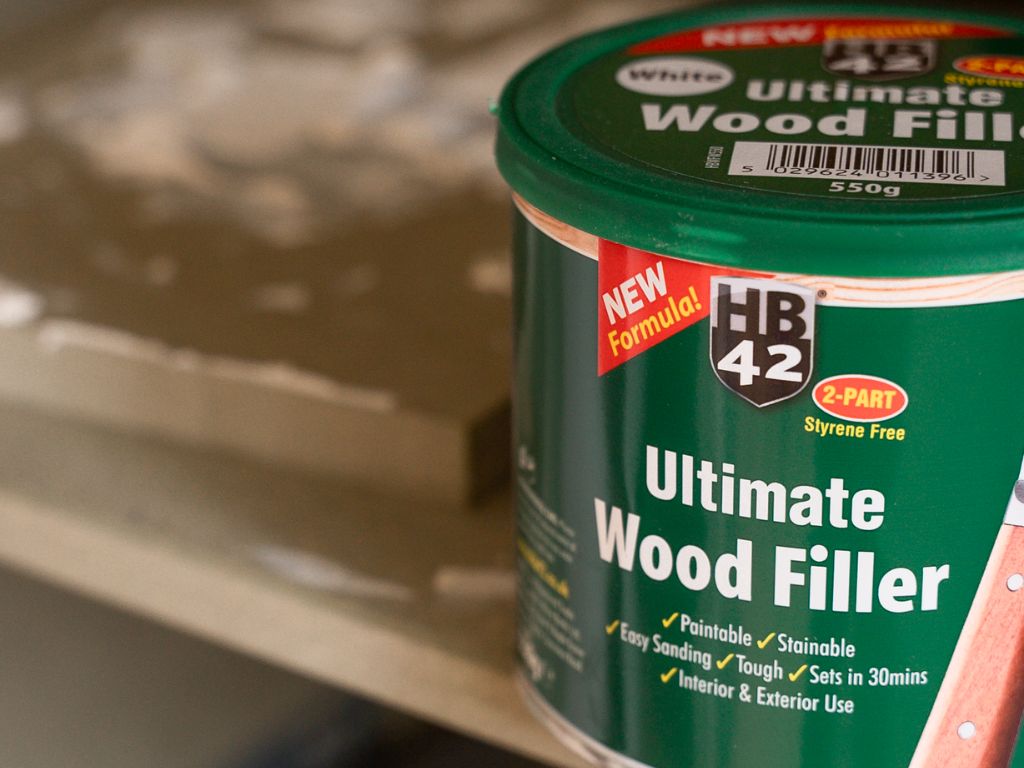

Best Wood Fillers to Buy in 2026: Top Picks for Every DIY & Professional Project
1. Introduction
Wood filler is a paste-like material used to fill holes, cracks, dents, and other surface imperfections in wood so it can be sanded smooth and finished. It’s commonly used before painting or staining to restore the appearance and integrity of the surface.
Why choosing the right one matters:
- Compatibility: Some fillers accept stain or paint better than others; choosing the wrong type can leave obvious, mismatched patches.
- Strength & durability: Exterior projects, load-bearing areas, or large repairs require a stronger, more durable filler than small indoor cosmetic fixes.
- Flexibility & movement: Wood expands and contracts—selecting a filler that withstands movement prevents cracking later.
- Ease of sanding & finishing: Different fillers sand differently; using the appropriate one ensures a smooth, professional finish.
Selecting the right filler ensures your repair blends seamlessly and lasts over time.
This guide is for Professionals and DIYers alike! This guide will cover types of wood filler, its different uses and the pro and cons of each one, plus some top recommended products.
2. What Is Wood Filler?
Wood filler is a repair compound that’s used to fill holes, cracks, dents, or other imperfections in unfinished wood surfaces. Once applied, it dries hard, can be sanded smooth, and accepts paint or stain to create a seamless, uniform finish.
Wood filler and wood putty are often confused, but they’re made differently and used for different situations. Here’s how they differ:
Composition
- Wood filler: Typically water-based or solvent-based, made from wood fibers or sawdust mixed with a binder.
- Wood putty: Usually oil-based and contains plasticizers; not made with real wood fibers.
When to Use
- Wood filler:
- Best for raw, unfinished wood.
- Used before staining or painting.
- Ideal for structural or deeper repairs.
- Wood putty:
- Used on finished (sealed) wood, such as after staining or varnishing.
- Great for minor surface blemishes like nail holes.
Hardening & Sanding
- Wood filler:
- Dries hard and can be sanded, stained, and painted.
- Because it hardens, it’s not ideal for wood that expands frequently outdoors unless it’s an exterior-grade filler.
- Wood putty:
- Stays slightly flexible; does not harden like wood filler.
- Cannot be sanded; excess must be wiped off.
Indoor/Outdoor Use
- Wood filler:
- Good for indoor and outdoor use if rated exterior-grade.
- Wood putty:
- Generally better outdoors because it remains flexible and resists weathering.
Stainability
- Wood filler: Usually stainable, though results vary and may not perfectly match.
- Wood putty: Usually not stainable; comes in pre-tinted colors to match finishes.
3. Types of Wood Fillers
Solvent-Based Wood Fillers
Durable, hard-drying fillers that resist shrinking and handle heavy-duty or exterior repairs well, but have stronger odors and longer drying times.
Water-Based Wood Fillers
Easy to use, fast-drying fillers that clean up with water; great for indoor projects and fine finishing, though less durable outdoors unless rated for exterior use.
Two-Part Epoxy Fillers
Extremely strong, chemical-resistant, waterproof fillers used for major repairs, including rotted wood restoration; ideal for exterior, structural, or marine applications.
Latex Wood Fillers
Flexible, smooth fillers that apply easily and accept paint well; best for small to medium indoor repairs and trim work.
Wood-Fibre Fillers
Fillers made with real wood fibers for a more natural look; sand easily and accept stain better than many other types—good for cosmetic repairs where blending matters.
Exterior vs. Interior Fillers
- Exterior fillers: Formulated to handle moisture, temperature changes, and UV exposure; resist cracking and shrinking outdoors.
- Interior fillers: Optimized for smooth sanding and finishing on indoor wood where durability demands are lower.
4. There are many Factors to Consider Before Buying a Wood Filler
- Project type (interior vs exterior)
- Stainability & paintability
- Drying time
- Sandability
- Color options
- Strength & durability
- Ease of application
- Price/value
5. The Best Wood Fillers to Buy in 2025
Best For: Small to medium interior repairs — nail holes, scratches, paneling issues, trim.
Key Features: Smooth, easy-to-apply filler; ideally used on indoor wood; cleans up with water.
Pros & Cons:
- Very easy to spread and smooth; workable with a putty knife.
- Dries fairly quickly; sandable and paintable.
- Not suited for heavy structural repairs or outdoor use.
Price Range: Mid-range; reasonable for regular home maintenance.
Why We Recommend It: Perfect for routine indoor woodwork — doors, skirting, furniture — especially when you need clean, paint-ready results without fuss.
2.Filltite Rapid Drying Exterior Filler
Best For: Exterior woodwork — fences, window frames, garden wood, doors exposed to weather.
Key Features: Quick drying, formulated to withstand moisture and outdoor conditions; designed for outside wood repairs.
Pros & Cons:
- Dries fast — useful if you’re working on outdoor wood in changing weather.
- Can resist the elements better than standard indoor fillers.
- Probably overkill for small indoor repairs; may not stain as naturally as fibre-based fillers.
Price Range: Affordable to mid-range.
Why We Recommend It: If you need a filler that copes with rain, moisture, or outdoor wear — this is a good choice to preserve exterior wood integrity.
3. HB42 Whole Job Ready Mixed Wood Filler
Best For: Everyday wood repairs — filling small holes, grain filling, dents and general interior/exterior wood fixes.
Key Features:
- One-component, ready-mixed wood filler — no mixing or hardener needed. hb42.co.uk
- Smooth, easy-to-apply consistency for quick jobs. hb42.co.uk
- Water-based and low odour. hb42.co.uk
- Dries fast (touch-dry in ~15 minutes, overcoatable in ~2 hours). hb42.co.uk
- Flexible, weatherproof finish that won’t shrink, sag or crack. hb42.co.uk
- Can be nailed, screwed, filed or planed once dry; paintable and stainable. hb42.co.uk
Pros & Cons:
- Very easy to use — ready mixed straight from the tub with no added hardener required. hb42.co.uk
- Versatile for small/medium wood repairs inside and out. hb42.co.uk
- Fast drying — gets you back to sanding/painting quickly. hb42.co.uk
- Low odour & water-based — more user-friendly than solvent fillers. hb42.co.uk
- Not designed for deep structural repairs — best suited to surface fixes and holes rather than major rot or heavy load-bearing areas.
Price Range: Budget-friendly general-purpose wood filler.
Why We Recommend It: A practical ready-mixed option if you want a simple, no-mix, multipurpose wood filler for everyday jobs — ideal for DIYers or quick household wood repairs without specialist products.
Best For: Wood finishing, fine woodworking, furniture restoration, interior trim where finish quality matters.
Key Features: High-quality filler that sands smoothly and blends well; good for finish work and achieving a clean surface.
Pros & Cons:
- Produces smooth, professional-looking finish — ideal for furniture and trim.
- Good balance between ease-of-use and finish quality.
- May not be the top pick for heavy structural repairs or exterior woodwork.
Price Range: Mid-range (a bit more premium than basic fillers).
- Why We Recommend It: If you care about aesthetics — furniture, cabinetry, fine woodwork — Osmo gives a clean, refined result that’s easy to sand and finish.
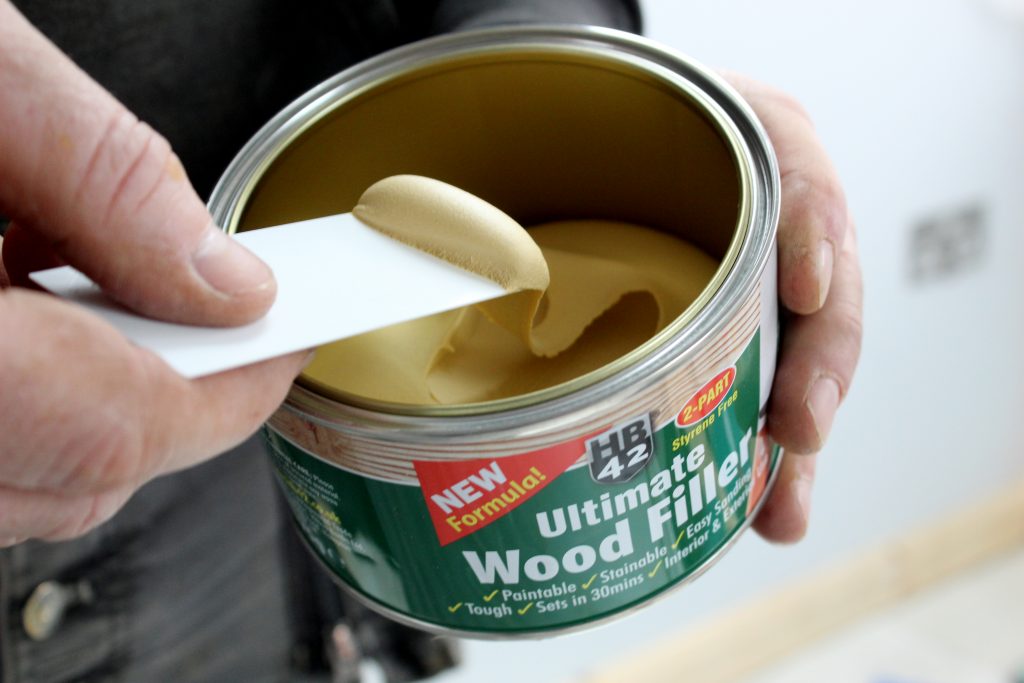
Best For: Medium-to-large wood repairs — holes, cracks, rot damage, knot holes.
Interior and exterior woodwork (e.g. window-frames, doors, skirting, bannisters).
Key Features
- Two-part polyester filler: you mix filler + hardener before use.
- Styrene-free formula (so less harsh solvent/fumes) — better for user health and indoor air quality.
- Sets hard in ~30 minutes to a strong, weatherproof finish.
- Once cured: can be sanded, drilled, planed, carved, screwed into — behaves like solid wood.
- Paintable and even stainable, and accepts most finishes/varnishes.
- Available in different sizes and finishes (e.g. “Natural/Pine & White), giving flexibility in matching wood type. Decorating Centre Online+1
Pros & Cons
Pros:
- Very strong and durable repair — works well for structural or semi-structural wood jobs.
- Weatherproof — suitable for exterior wood and damp-prone areas.
- Excellent workability: sands smooth, drills, holds screws.
- Styrene-free and low-odour compared with many older two-part fillers, so safer and more pleasant to use.
- Works for a wide variety of repairs: from small cracks to large holes, rot repairs, knots, splits, and even some marine applications. Cons:
- As a two-part filler, you must mix filler and hardener correctly — incorrect mixing can lead to poor cure or failure.
- Typically more expensive than simple pre-mixed water-based fillers. The Decorators Forum UK+1
- Might be overkill for small, shallow defects (pinholes, minor scratches) — simpler fillers may suffice and be easier to use.

Price Range
Based on available listings: roughly £10–£25, depending on size and retailer.
Why We Recommend It
HB42 Ultimate Wood Filler strikes a strong balance between durability, versatility and finish quality. Because it cures hard, is weatherproof, and can be worked like timber — drilled, sanded, painted or stained — it’s ideal for serious wood repairs where longevity matters (e.g. exterior doors, windows, rot repair, structural repairs). Its styrene-free, low-odour formula also makes it safer and more user-friendly than older two-part fillers, while still delivering professional-grade results.
Wood Filler Comparison Table
| Product | Best Use | Interior / Exterior | Stainable | Price Range | Dry Time |
| Toupret Wood Repair Filler | Small–medium interior repairs (nail holes, scratches, trim, paneling) | Interior | Paintable (stain results vary) | Mid-range | 30–60 minutes |
| Filltite Rapid Drying Exterior Filler | Exterior repairs (fences, window frames, doors, outdoor wood) | Exterior | Not ideal for staining | Affordable–Mid-range | Rapid drying |
| Metolux 1 Part Wood Filler | Basic indoor repairs (furniture, skirting, small holes) | Interior | Paintable, limited stain match | Budget-friendly | Around 1 hour (varies) |
| Osmo Wood Filler | Fine woodworking, furniture restoration, cabinetry, trim | Interior | Yes — designed for high-quality finish | Mid-range / Premium | Moderate (depends on depth) |
| HB42 Ultimate Wood Filler (Two-Part) | Medium–large repairs, rot, knots, structural repairs | Interior & Exterior | Yes — paintable and stainable | £10–£25 | ~30 minutes (gel in ~10 min) |
6.How to Use Wood Filler Properly
Prepare the Surface
Good prep is the difference between a seamless repair and one that cracks later.
- Clean the area of dust, dirt, loose material, and old flaky paint.
- Remove any loose or rotten wood. (For deep rot, use epoxy consolidator first.)
- Make sure the surface is dry — moisture prevents filler from bonding.
Choose the Right Filler
Select based on your project:
- Water-based → small interior fixes, easy sanding
- Solvent-based → stronger, better adhesion
- Two-part epoxy → rot repairs, exterior durability
- Latex/simple fillers → cosmetic interior work
(This avoids cracking or mismatching later.)
Apply Wood Filler
- Stir well if needed.
- Scoop some filler onto a putty knife.
- Press it firmly into the hole or crack, pushing out any air pockets.
- Slightly overfill the area — wood filler shrinks as it dries.
- Smooth the surface with your knife.
For two-part fillers (like HB42, Ronseal HP, epoxies)
- Mix filler + hardener until the colour is uniform.
- Work quickly — you typically have 5–15 minutes before it starts setting.
- Apply firmly, overfilling slightly.
Let It Fully Dry
Dry times depend on filler type:
- Water-based: 20–60 minutes
- Solvent-based: 1–4 hours
- Two-part epoxy: 10–30 minutes
Never sand early — it will tear or crumble.
Sand Smooth
Use:
- 120–150 grit to level the repair
- 220 grit to finish smoothly
Sand until it blends seamlessly with the surrounding wood.
Check for Imperfections
If you see:
- tiny holes
- shallow dips
- rough edges
Apply a thin skim of filler again, let it dry, and re-sand.
This is completely normal — pros often do two passes.
Paint, Stain, or Finish
If painting:
- Apply a primer first for best adhesion.
If staining:
- Choose a stainable filler (regular fillers may not match wood grain).
- Expect slight colour differences — test first if possible.
If varnishing/oiling:
- Sand extra smooth so the repair blends in.
Bonus Tips for a Perfect Result
- Keep your putty knife clean — wipe between passes for a smoother finish.
- For deep holes, fill in layers, letting each dry.
- For outdoor repairs, always use exterior-rated or epoxy fillers.
- For rotten wood, use a wood hardener/consolidator before filling.
- Don’t try to sculpt the final shape with filler; sand it into shape later.
Common Wood Filler Mistakes to Avoid
- Applying too much
- Not letting it fully dry
- Using indoor filler outdoors
- Expecting filler to hold heavy weights
- Staining without testing
6. Frequently Asked Questions
- Can wood filler be stained? Yes, if stainable; results vary.
- Can you screw into wood filler? Yes, but only with strong fillers (e.g., epoxy, HB42).
- Is wood filler waterproof? Only exterior-grade or epoxy.
- Wood filler vs epoxy? Epoxy is far stronger and waterproof; filler is for general repairs.
Final Thoughts: Choosing the Best Wood Filler for Your Project
Finding the best wood filler comes down to understanding your project needs—whether you’re repairing fine furniture, restoring exterior timber, or filling everyday dents and gaps. As this guide shows, not all fillers are created equal. Some excel in interior cosmetic repairs, while others are built for heavy-duty structural work or weather-resistant outdoor restoration.
Best Wood Filler to Buy
Water-based, solvent-based, latex, wood-fibre, and two-part epoxy fillers each offer unique strengths. Selecting the right type ensures your repair is smooth, durable, and easy to finish—whether you’re painting, staining, or varnishing. Before buying, always consider factors like drying time, sandability, stainability, strength, and cost to make an informed choice.
Best Wood Filler to Buy
Our top picks for 2025–2026 highlight standout products for every situation:
- Toupret for clean interior touch-ups,
- Filltite for fast and reliable exterior work,
- Metolux for budget home maintenance,
- Osmo for high-quality furniture finishing, and
- HB42 Ultimate for ultra-strong, long-lasting structural repairs.
Each product brings something different to the table, helping DIYers and professionals achieve flawless results across a range of applications.
By following the proper application method—prep, apply, dry, sand, and finish—you can ensure your filler blends seamlessly into the surrounding wood. Avoiding common mistakes like sanding too early or using indoor filler outdoors will help your repair last for years.
Whether you’re fixing small imperfections or tackling major restoration, the right wood filler paired with the right technique will give your project a smooth, professional finish every time.
Author: Scarlet Banks
Director of HB42





0 Comments